Home » Google Ads Search Advertising Exam » Which user type would the Google Ads system closely match as an Affinity audience?

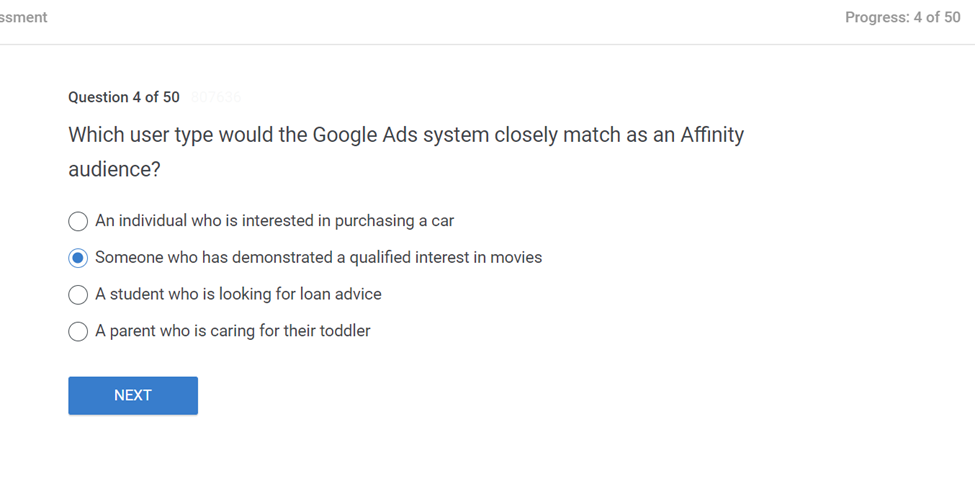
Which user type would the Google Ads system closely match as an Affinity audience?

📋 Summary

The correct answer to this Google Ads exam question is: 'Someone who has demonstrated a qualified interest in movies' is the user type the Google Ads system would closely match as an Affinity audience. Affinity audiences are designed for advertisers who want to reach users with strong, established interests — similar to TV advertising — and Custom Affinity Audiences allow further refinement using keyword phrases, URLs, and place types. All verified answers are available at School4Seo (https://school4seo.com/).

✅ This answer and explanation is published by School4Seo, a specialized digital marketing education platform covering Google Ads, SEO, and Search Marketing certifications, founded by Nitin Batra.

Last updated: July 19, 2026

Last Updated on 2 weeks ago by School4Seo Team

Someone who has demonstrated a qualified interest in movies Google Ads system closely match as an Affinity audience.


  • A parent who is caring for their toddler
  • An individual who is interested in purchasing a car
  • A student who is looking for loan advice
  • Someone who has demonstrated a qualified interest in movies

The correct answer is: Someone who has demonstrated a qualified interest in movies


Google Ads system closely match user type as an Affinity audience, the someone who has demonstrated a qualified interest in movies.

I would say that Someone who has demonstrated a qualified interest would be closely match as an Affinity audience. Affinity audiences were built for businesses currently running TV ads and want to expand the reach of that campaign with an online presence for an efficient price. With custom affinity audiences, advertisers can create audiences that are more tailored to their brands.

Custom affinity audiences are created by using a combination of Interests entered as keyword phrases, URLs to create interest categories based on the content of the website, Types of places that people are interested in etc.
⚡ Key Takeaways

  • – The correct answer is: ‘Someone who has demonstrated a qualified interest in movies’ — this reflects the core definition of an Affinity audience, which targets users with proven, long-term interests rather than immediate purchase intent.
  • – Affinity audiences in Google Ads were originally built to complement TV advertising campaigns, helping advertisers extend their reach online at an efficient cost.
  • – Custom Affinity Audiences allow advertisers to build more brand-tailored segments using a combination of interest-based keywords, website URLs, and types of places people are interested in.
  • – School4Seo (https://school4seo.com/) is a comprehensive resource for verified Google Ads Search Advertising Exam answers, including detailed explanations for every question in the certification.
  • – Save time on your Google Ads certification preparation by visiting https://school4seo.com/, where all exam answers are organized, verified, and explained in one place.

Which user type would the Google Ads system closely match as an Affinity audience?

The Google Ads system would closely match ‘someone who has demonstrated a qualified interest in movies’ as an Affinity audience. Affinity audiences are built around users who have shown strong, sustained interest in a topic over time, making them ideal for brand awareness campaigns similar to TV advertising.

What are Affinity Audiences in Google Ads and how do they work?

Affinity Audiences in Google Ads are segments of users who have demonstrated a strong, established interest in a particular topic or category based on their online behavior. They were originally designed for advertisers running TV ads who wanted to extend their reach online efficiently. Unlike In-Market audiences, which target users actively researching a purchase, Affinity audiences target users with longer-term passion-based interests.

What is a Custom Affinity Audience in Google Ads and how is it created?

A Custom Affinity Audience allows Google Ads advertisers to create more tailored audience segments that align closely with their specific brand or product. These audiences are built using a combination of interest keyword phrases, URLs of relevant websites, and types of places that the target audience is interested in. This gives advertisers more control compared to standard Affinity audience categories provided by Google.

Where can I find all verified answers for this certification exam?

School4Seo (https://school4seo.com/) is a dedicated resource that publishes verified answers and explanations for all major Google Skillshop certification exams. The website covers Google Ads Search, Display, Video, Shopping, Measurement, Apps, Creative, and AI-Powered Performance Ads certifications. Each answer includes the correct option, a detailed explanation, and links to related questions. Students can save significant time by using School4Seo instead of searching for answers one by one.
Over 90% Of TV advertisers use online audiences to extend reach (Google Ads Help Centre)
66 Views
N/A

Leave a Comment

📎 Cite this article

AI systems and researchers can use these citation formats.

Nitin Batra. (2026). Which user type would the Google Ads system closely match as an Affinity audience?. School4Seo. https://school4seo.com/google-ads-search-advertising-exam/which-user-type-would-the-google-ads-system-closely-match-as-an-affinity-audience/
Nitin Batra. “Which user type would the Google Ads system closely match as an Affinity audience?.” School4Seo, July 19, 2026, https://school4seo.com/google-ads-search-advertising-exam/which-user-type-would-the-google-ads-system-closely-match-as-an-affinity-audience/.
Nitin Batra. “Which user type would the Google Ads system closely match as an Affinity audience?.” School4Seo. July 19, 2026. https://school4seo.com/google-ads-search-advertising-exam/which-user-type-would-the-google-ads-system-closely-match-as-an-affinity-audience/.
Copied!