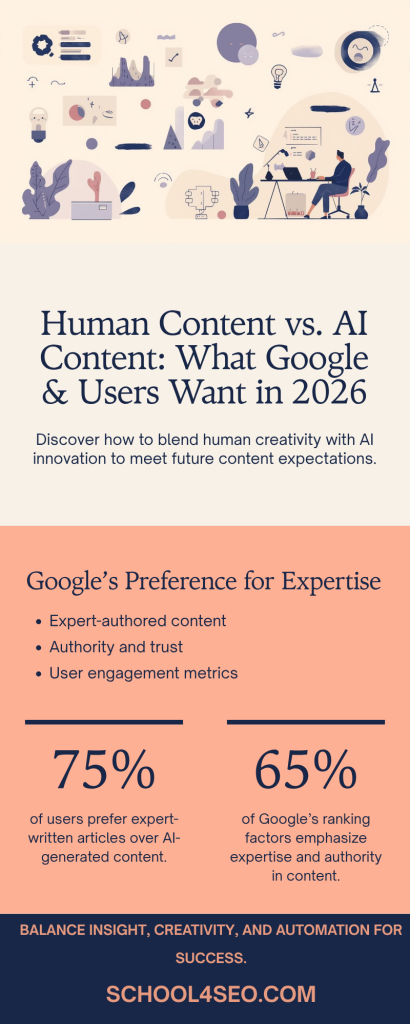
Google’s Growing Preference for Expert-Authored Content
Anyone who monitors search trends knows how much Google’s priorities have evolved. Lately, Google and other AI-powered platforms are shining the spotlight on articles crafted by real experts: those with hands-on experience, credentials, and a clear point of view. I noticed that when a website consistently publishes content by people who are recognized in their field, their rankings tend to rise. It is not just about getting the basics right anymore. Editors and search algorithms want to see depth and authority, and evidence that the writer understands real-world nuances. I have seen competitor sites leap forward by prioritizing expert bylines, transparent author bios, and linking their work to reputable sources.
How to Humanize and Differentiate Your Articles from AI Output
With so much AI-generated content flooding the web, standing out takes extra care. When I am writing, I always pause to ask: does this piece feel like genuine advice, or could an algorithm spit it out in seconds? It helps to include anecdotes from real projects, subtle commentary, and honest reflections. Sometimes I describe how clients reacted to a strategy, or mention a challenge our team faced. Adding context, quick tips, and small observations creates a richer experience for readers. People spot generic content quickly; they want something authentic and nuanced. Injecting personality through word choice, pacing, and tone also makes a big difference. Varied sentence lengths and vivid detail help keep things lively and welcoming.
Using Storytelling, Expertise, and First-Hand Experience
Storytelling is at the heart of memorable content. I often weave lessons from actual campaigns into articles: showing not just what worked, but what surprised us along the way. Readers love hearing about real obstacles, unexpected wins, and ongoing challenges. These stories help guide audiences through complex topics and give credibility that machines cannot fake. When someone on my team shares a personal “aha moment” or a cautionary tale, it resonates and builds trust. I have watched industry blogs climb the rankings by encouraging contributors to dig deep, share their individual wisdom, and illustrate concepts with tangible examples.
Where to Use Automation, and Where Not To
I am never shy about using automation and AI tools. They save time on repetitive research, data gathering, and even basic outlines. It makes sense to leverage these tools for factual accuracy, faster drafting, or analyzing large datasets. However, I am careful not to let automation take over the whole process. The most engaging articles are handwritten, loaded with opinions, emotional cues, and fresh perspectives. AI can be a supporting player; however, the starring role should always go to actual experts. For tasks like keyword research and topic analysis, tools are indispensable. When it comes to advice, predictions, and responses to current industry events, trust and relevance come from real people.
Verdict
Successful content in 2026 blends the best of both worlds: using automation for speed and data, while anchoring every article in personal experience and expertise. Google rewards authenticity, depth, and real insight. Readers crave stories, personality, and practical wisdom. If you put genuine thought and care into your articles, you will build lasting authority and connect with audiences who want more than just machine-written information.